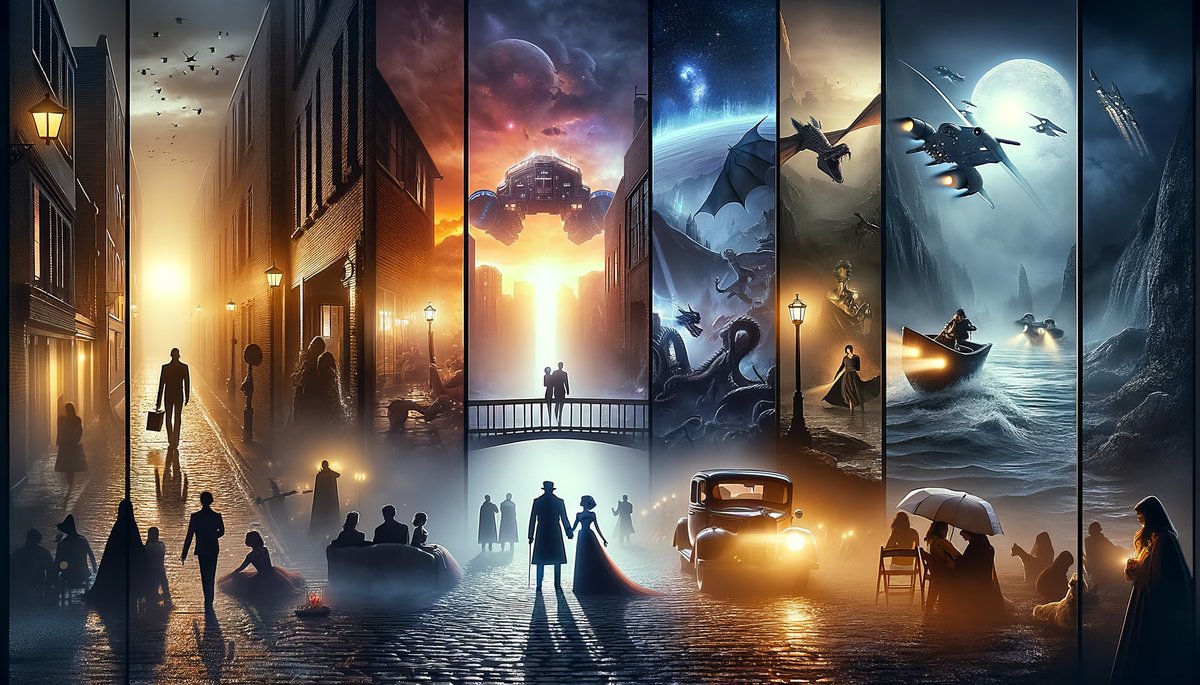
From the explosive car chases of action films to the quiet introspection of independent dramas, movies speak to us in a language as diverse as humanity itself. But how do we make sense of this sprawling cinematic universe? The answer lies in Film Genres & Thematic Collections—the invisible architecture that helps us categorize, understand, and even anticipate the stories unfolding on screen. Think of genres not just as labels, but as shared languages between filmmakers and audiences, constantly evolving, overlapping, and even defying definition.
In this guide, we'll journey through the rich landscape of film genres, exploring their defining characteristics, iconic conventions, and how they shape our viewing experience. Whether you're a casual movie-goer or a budding film aficionado, understanding these classifications will deepen your appreciation for the art of cinema.
At a Glance: Navigating the Cinematic Universe
- Genres are more than labels: They’re frameworks based on narrative, themes, style, and audience appeal.
- They're not static: Genres constantly evolve, leading to exciting hybrids and new subgenres.
- Conventions are key: Recurring elements (plot devices, archetypes, visual styles) define a genre, but filmmakers love to subvert them.
- Technology shapes genres: Advancements in effects and sound push boundaries, especially in sci-fi, fantasy, and action.
- Identifying a genre: Look at the plot, characters, setting, visual style, and emotional impact.
- Hollywood has biases: Historically, dramas and epics fared better at awards shows, though this is shifting.
Beyond the Box Office: Why Film Genres Truly Matter
At its heart, a film genre is a powerful organizing principle. It helps audiences navigate the vast ocean of content, allowing them to choose films that align with their mood or interests. For filmmakers, genres provide a familiar canvas upon which to paint new stories, offering a set of expectations to either meet, subvert, or blend. They influence everything from screenplay structure and visual design to casting choices and marketing strategies.
Imagine trying to describe a movie to a friend without mentioning "comedy" or "thriller." It would be a much longer, more arduous conversation, wouldn't it? Genres provide a shorthand, a common ground for discussing and appreciating cinema.
The Living Canvas: How Genres Evolve
Film genres are far from rigid. They're living entities, breathing and shifting with cultural trends, technological leaps, and societal changes. What was once a clear-cut western might now blend with sci-fi elements to create something entirely new, like "cowboys and aliens." This evolution is crucial for keeping cinema fresh and relevant. New subgenres emerge, old ones get re-imagined, and sometimes, a whole new category takes root, reflecting the anxieties or aspirations of a given era.
Consider the classic film noir of the 1940s—a genre born from post-war cynicism and cinematic innovation. Today, "neo-noir" or "post-noir" films reimagine those dark, morally ambiguous themes for a contemporary audience, often with color cinematography and modern twists, proving that even a "classic" style can find new life.
The Filmmaker's Toolkit: Conventions & Subversion
Every genre comes with its own set of "conventions"—those recurring plot devices, character archetypes, visual styles, and thematic concerns that we've come to expect. Think of the "damsel in distress" in an adventure film, the "jump scare" in horror, or the "happily ever after" in a romance. These conventions are like guardrails, guiding the audience's experience.
However, great filmmakers often leverage these conventions not just to satisfy expectations, but to cleverly subvert them. By playing with what we anticipate, they can create surprise, deeper meaning, or even entirely new emotional responses. A horror film that builds tension without relying on jump scares, for instance, can be even more terrifying precisely because it breaks the mold. This dance between convention and subversion is what keeps genres exciting and endlessly inventive.
Decoding the Cinematic Spectrum: A Genre-by-Genre Guide
Let's dive into some of the most prominent film genres, understanding what makes them tick and why they captivate us.
Adrenaline & Adventure: The Thrill Seekers' Choice
These films are all about getting your heart racing and transporting you to exhilarating situations.
- Action Films: Defined by sheer impact and relentless energy, action films are a spectacle of physical stunts, chases, battles, and non-stop motion. They aim for pure escapism, often featuring adventurous heroes and incredible pacing. While frequently box-office powerhouses, they sometimes face criticism for simpler character arcs. Think high-octane sequences and a feeling of constant forward momentum.
- Adventure Films: Taking us to exotic locales and on exciting quests, adventure films emphasize vicarious living. They invite us to journey with characters through explorations, conquests, and struggles, often creating iconic male and, increasingly, resourceful female heroic stars. The emphasis here is on the journey and the discovery.
- Thriller-Suspense Films: These films are masters of anticipation, designed to create intense excitement, uncertainty, and nerve-wracking tension. The plot relentlessly builds towards a climax, often placing the main character in a menacing situation from which escape seems impossible. The goal is to keep you on the absolute edge of your seat, questioning every turn.
Laughs & Life Lessons: The Human Experience on Screen
These genres delve into the spectrum of human emotion, from uproarious laughter to profound introspection.
- Comedy Films: The oldest and arguably most popular genre, comedies are designed to elicit laughter and amusement. They use slapstick, witty dialogue, satire, or absurd situations to humorously exaggerate life's frustrations and deficiencies, typically resolving with a happy ending. Comedies offer a momentary, light-hearted escape, often with a surprisingly serious undercurrent.
- Drama Films: Probably the largest and most encompassing genre, drama films offer serious presentations of realistic characters in conflict. They explore human beings at their best, worst, and everything in between, covering a vast array of thematic concerns. Dramas provide a mirror to life, prompting reflection and empathy.
The Dark Side & The Fantastic: Exploring the Unknown
These categories venture into the shadowy corners of society or transcend the boundaries of reality.
- Crime and Gangster Films: Centered around the sinister actions of criminals, gangsters, or law enforcement, this genre explores worlds operating outside the law. It often overlaps with detective-mystery and film noir, encompassing sub-types like police procedurals and crime comedies. It’s a deep dive into morality, justice, and transgression.
- Horror Films: Designed to frighten, panic, and invoke our deepest, hidden fears, horror films explore the dark side of life, the forbidden, and strange events. They offer a cathartic experience, allowing us to confront primal fears like vulnerability, the unknown, and death, all from a safe distance.
- Film Noir (Classic): A distinct style developed in post-WWII America, characterized by pessimism, anxiety, and moral ambiguity. Shot in low-cost, black-and-white, it utilized advancements in filmmaking to create a shadowy, cynical world. Modern "neo-noirs" continue to explore these moods and themes, often in color, reflecting contemporary struggles.
- Fantasy Films: Taking audiences to magical or mythical realms, fantasy films transcend human possibility and physical laws. They are rooted in imagination, dreams, and wonder, featuring elements like magic, mythical creatures, and extraordinary events. Unlike sci-fi, they don't rely on scientific rationale, appealing to both children and adults with their pure escapism.
- Science Fiction Films (Sci-Fi): Visionary and imaginative, sci-fi films explore quasi-scientific concepts, advanced technology, and futuristic settings. They often feature gadgets, robots, spaceships, and special effects, and frequently express concerns about technology's potential dangers. Sci-fi can overlap with action, horror (especially when technology turns malevolent), and even philosophy, pondering humanity's future.
Worlds Beyond Reality: Animation & Documentation
These genres represent distinct methods of storytelling, one unbounded by physical reality, the other grounded in it.
- Animation Films: Rather than simply photographing reality, animation creates each frame individually, whether through hand-drawing, CGI, or stop-motion. This process offers unfettered creativity and visual storytelling, making it a powerful medium for all ages, capable of bringing any imaginary world to life.
- Documentary Films: Non-fiction films intended to document reality, documentaries serve to instruct, educate, or maintain a historical record. They can range from objective observations to investigative journalism or deeply personal essays, all aiming to reflect and interpret the world as it is.
History & Heartstrings: Love, Loss, and Grand Spectacle
These genres explore human relationships and monumental events, often on a grand scale.
- Epics-Historical Films: These "period pictures" often bring historical or imagined events, or mythic figures, to life with extravagant settings, lavish costumes, grandeur, and sweeping musical scores. They cover vast stretches of time, following heroes against the backdrop of significant historical moments. The focus is on scope, spectacle, and narrative ambition.
- Romance Films: At their core, romance films are love stories centered on the passionate, affectionate involvement of main characters, charting their journey through courtship, marriage, or overcoming obstacles. The search for or maintenance of love is the primary plot focus, often navigating challenges like social class, illness, or family disapproval.
- War and Anti-War Films: Acknowledging the horror and heartbreak of conflict, these films use actual combat or international disputes as their primary plot or background. They explore themes like heroism, sacrifice, survivor stories, POW experiences, and the sheer futility and inhumanity of battle, often fostering a deeper understanding of human resilience and suffering.
Rhythm & Grit: Sport, Song, and the Wild Frontier
These categories are often deeply rooted in specific cultural contexts or expressive art forms.
- Musical/Dance Films: Emphasizing full-scale song and dance routines, these films integrate music, choreography, and lyrics significantly into the narrative, or as "eruptions" of escapist spectacle. Often featuring talented cast members who sing and dance, they offer an alternative, heightened vision of reality, enhanced by tremendous orchestration.
- Sports Films: Centralizing around a sports setting, a competitive event, or an athlete, these films explore themes of heroism, underdog stories, training, and the physical and psychological toll of competition. They often create memorable portraits of individuals or teams facing tough odds, frequently focusing on popular sports like baseball, football, or boxing.
- Western Films: The quintessential American genre, westerns serve as a nostalgic eulogy to the early days of the untamed American frontier. They are one of the oldest, most enduring, and flexible genres, focusing on themes of frontier life, cowboys, outlaws, and the clash between civilization and the wilderness. They capture a mythic period of American history.
The Uncategorizable: Cult Films
While fascinating, "cult" isn't technically a genre, but rather a description of a film's reception.
- Cult Films: These films possess a limited but fiercely dedicated appeal, often characterized by being strange, quirky, offbeat, or surreal. They frequently challenge standard narrative and technical conventions, becoming controversial or transgressive. Their "cult" status comes from their unique following, rather than adherence to a specific narrative formula. They are defined by how they are loved, not what they are.
The Art of Blending: Genre Hybrids and Subgenres
In today's cinematic landscape, pure genres are becoming rarer. Instead, we often encounter genre hybrids and subgenres—films that blend elements from multiple categories to create something fresh and nuanced.
How New Stories Emerge
Think of "Shaun of the Dead," a brilliant blend of horror and comedy, or "Blade Runner," a science fiction film deeply infused with film noir aesthetics. These hybrids don't just mash two genres together; they use the conventions of one to comment on or subvert the expectations of another. This blending allows filmmakers to tell more complex stories, explore new thematic territory, and keep audiences guessing. It's a testament to the dynamic nature of cinema, always seeking new ways to express itself.
When is a Genre a Subgenre?
The line between a genre and a subgenre can be blurry. A subgenre is essentially a more specific category within a broader genre. For example, within "horror," you have subgenres like "slasher," "found footage," "supernatural," or "psychological horror." Within "comedy," you might find "romantic comedy," "dark comedy," or "satire." These distinctions help us pinpoint the specific flavor or approach a film takes within its larger generic family. They’re crucial for giving us a more precise understanding of a movie's intended impact and style.
Beyond the Screen: How Genres Shape Hollywood (and Our Viewing Habits)
Genres do more than just help us categorize movies; they are fundamental to the business and art of filmmaking, influencing everything from production to critical reception.
Marketing & Audience Targeting
For studios and distributors, genre labels are vital marketing tools. They allow them to target specific demographics, craft trailers that highlight genre conventions, and set audience expectations. A film marketed as a "family animation" will appeal to a vastly different audience than one branded as a "gritty crime thriller." Understanding these genre cues helps you, the viewer, decide if a movie is likely to be your cup of tea or something you'd rather skip. It’s also a powerful way for studios to strategize for maximum box office impact, using genre to predict appeal.
The Awards Season Conundrum: Genre Biases
While a thrilling action film might rake in billions, historically, it's often the serious dramas, biopics, or epic historical productions that capture the most prestigious awards, like the Academy Award for Best Picture. There's a perceived "genre bias" in awards season, favoring films with weighty social themes or literary pretensions.
However, this trend is slowly changing. In recent years, more quirky independent films, genre-bending features, and even some horror films have received critical acclaim and major nominations, signaling a shift in how the industry views the artistic merit across the diverse spectrum of cinematic expression.
Your Guide to Genre Exploration (and Defying Expectations)
Armed with this knowledge, you're ready to explore the vast world of cinema with a deeper appreciation.
Identifying a Film's True DNA
When trying to identify a film's genre, go beyond the superficial. Consider these elements:
- Plot: What is the central conflict or journey?
- Characters: What archetypes are present? What are their motivations?
- Setting: Does it play a crucial role? Is it realistic, fantastical, or futuristic?
- Visual Style: Is it dark and shadowy (noir)? Bright and colorful (musical)? Fast-paced and chaotic (action)?
- Dominant Emotions: Does it evoke fear, laughter, romance, or suspense?
Often, a film will draw from multiple genres, making these questions even more interesting to ponder. Don't be afraid to recognize a film as a "sci-fi western" or a "romantic comedy with thriller elements." That's where the real fun begins!
Embracing the Unfamiliar
One of the greatest joys of cinema is discovering new experiences. If you typically stick to one or two genres, challenge yourself to explore beyond your comfort zone. You might find a profound drama in a sci-fi setting, or a hilarious comedy with a surprisingly poignant message. The interconnectedness of genres means that a film you love in one category might share surprising DNA with another you've never considered. For a comprehensive dive into all things film, consider Your ultimate movie resource. It's a fantastic starting point for exploring the nuances of film and discovering your next favorite movie, no matter the genre.
The Endless Story: Appreciating Cinema's Dynamic Nature
Film genres and thematic collections are more than just organizational tools; they are a testament to cinema's enduring power to tell stories, evoke emotions, and reflect the complexities of the human experience. They are dynamic, constantly evolving, and endlessly fascinating. By understanding their conventions, appreciating their evolution, and recognizing their hybrids, you unlock a richer, more engaged way of watching movies. So, the next time you settle in for a film, pay attention to its genre—and then marvel at how it meets, defies, or brilliantly redefines your expectations. The conversation about film is always evolving, just like the genres themselves.